What age is right for a personalized children's book?
How to tell whether a personalized children's book fits ages 3 to 9, with age-by-age reading cues and practical checks.
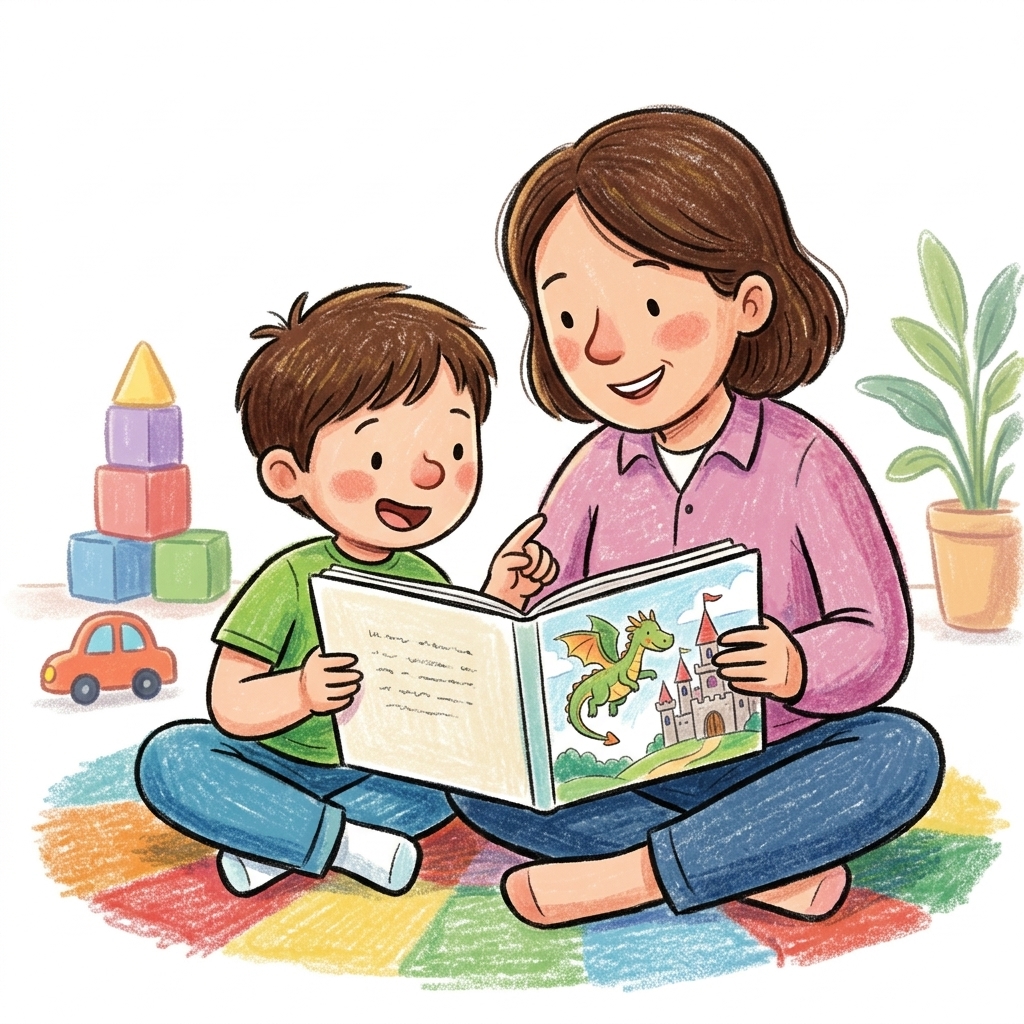
The right age for a personalized book is the age when the child can recognize something of themselves in the story and enjoy sharing it with an adult.
A personalized children’s book works best when the story fits how the child reads now, not just the number on the product page. For most gift-givers, the useful range is broad: a three-year-old can enjoy a simple, concrete adventure read aloud, while an eight- or nine-year-old needs more agency, plot, and respect for their growing independence.
That is why “age 3 to 9” should be treated as a reading-fit range, not a promise that one story shape suits every child. Age tells you how much support, complexity, humor, emotion, and text the book should carry.
In this guide we look at what changes from preschool to early independent reading, how personalization helps at each stage, and what to check before choosing a book.
The quick answer by age
For ages 3 to 5, choose a personalized book that is mainly read aloud, with visible action, repetition, feelings, and details the child can point to. For ages 6 to 7, look for a clearer mission, a stronger plot, and questions that invite the child to predict what happens next. For ages 8 to 9, the book must respect the child as a reader: it needs a real problem, an interesting world, and personalization that feels specific rather than babyish.
| Age | Best reading mode | What the story needs |
|---|---|---|
| 3 to 5 | Read aloud together | Concrete scenes, emotion words, rhythm, familiar details |
| 6 to 7 | Read together, with the child joining in | A mission, cause and effect, questions, visual clues |
| 8 to 9 | Shared or partly independent reading | More plot, choice, humor, richer language, emotional honesty |
The American Academy of Pediatrics recommends shared reading from birth through at least kindergarten because it supports language-rich interaction, relationships, and early literacy.¹ That does not mean every personalized book is for babies. It means the adult-child reading moment matters before, during, and after the child learns to decode words alone.
What matters most from ages 3 to 5?
From ages 3 to 5, the concept of personalization matters less than recognition: their name, a familiar routine, a favorite animal, a room that feels like home, a grown-up voice saying, “That sounds like you.”
At this stage, the story should be easy to act out and retell. Speech and language guidance for preschoolers recommends reading simple stories, talking about them, helping children retell or act them out, and using questions as a game.²
That makes a personalized story useful when it opens a conversation:
- “What do you think the hero will find behind the blue door?”
- “Which part felt like your day?”
- “How do you think the dragon felt when everyone was too loud?”
Dialogic reading research points in the same direction. The What Works Clearinghouse describes dialogic reading as an interactive picture-book practice where the child gradually becomes the storyteller and the adult listens, prompts, and asks questions; its reviewed preschool studies show positive effects on oral language.³
What a good age-3-to-5 story includes
Look for short scenes, clear emotional stakes, and pictures that do real work. The child should be able to follow the problem even if they cannot remember every sentence.
Personalization should be concrete. A beloved blanket, a dog named Lúa, a Saturday walk, or a fear of the dark is more useful than a long list of adjectives.
What to avoid for this age
Avoid a story that depends on long explanations, irony, or a complicated quest. A four-year-old can enjoy wonder, but the story still needs visible cause and effect.
Also be careful with text-heavy pages. If the adult has to paraphrase every paragraph, the book may be written for an older child.
What changes around ages 6 and 7?
Around six and seven, many children are starting to read simple text, but shared reading still matters. Reading Rockets notes that many children begin reading independently in first grade, while others do so earlier or later; for ages 5 to 8, it recommends strong storylines and character development for books read with children, and familiar vocabulary for independent reading.⁴
This is the age when a personalized book can move from “look, that is me” to “I want to know what I do next.” The child can handle a clearer mission: rescue the lost comet, solve the riddle in the birthday cake, find courage before the school play, or decide how to welcome a new sibling.
At six or seven, personalization works best when it gives the child a role in the plot, not just a name on the page.
The adult can still read most of the book aloud, but the child may read repeated lines, chapter titles, dialogue, or short clues. That mix helps the book feel grown-up without turning the gift into homework.
What a good age-6-to-7 story includes
Choose a story with a visible goal, a few surprises, and chances to predict. First-grade read-aloud guidance highlights richer language, plots that invite children to guess what comes next, and characters close to the child’s experience.⁵
A personalized book can use exactly that: a familiar interest becomes the plot engine, and the “heart of the story” gives the mission meaning.
What to avoid for this age
Avoid babyish framing. Many six- and seven-year-olds notice when a book talks down to them.
The safer path is simple language with a real adventure. A child can still need reading support while wanting a story that feels older.
What should a book do for ages 8 and 9?
For eight- and nine-year-olds, the risk is not that personalization stops working. The risk is that it feels too obvious. A child this age may not want their name repeated on every page; they may want proof that the adult understands who they are becoming.
Reading Rockets says second graders often still return to old favorites, while third-grade read-alouds can handle tougher topics, relatable characters, and conversations around daily challenges.⁵ That is useful for a personalized book because the story can meet two needs at once: enough maturity for the child and enough closeness for the gift-giver.
This is also when reading motivation starts to matter more sharply. Scholastic’s 2024 report says read-aloud frequency drops from 51% of children ages 0 to 5 being read aloud at home 5 to 7 days a week to 37% for ages 6 to 8 and 16% for ages 9 to 11.⁶ A later National Literacy Trust report found that only 32.7% of UK children and young people aged 8 to 18 said they enjoyed reading in their free time in 2025.⁷
Those numbers do not mean a personalized book fixes reading motivation. They do suggest that the older the child gets, the more the book has to earn their interest.
What a good age-8-to-9 story includes
Give them a real choice, a problem with a cost, and a world with texture. Humor helps. So does a companion who challenges the hero instead of simply praising them.
For a reluctant reader, look for the high-interest, low-friction principle: age-respectful subject matter with accessible language. Reading Rockets describes high/low books as using engaging topics, illustrations, careful vocabulary, simple sentences, and compelling stories so struggling readers do not feel they are reading something for much younger children.⁸
What to avoid for this age
Avoid a story that treats the child as a mascot. The gift should say, “I see your interests, worries, jokes, and courage,” not “your name is printed here.”
If the child already reads independently, do not assume they want to read the whole book alone. A personalized keepsake can still be a shared ritual, especially when the adult knows the story behind the details.
How does personalization change by age?
Personalization should become subtler as the child grows. Younger children often delight in direct recognition. Older children usually need the personalization to shape the plot, humor, conflict, and emotional heart.
A small study of 18 preschoolers found that children learned unfamiliar words better from personalized sections of a book than from non-personalized sections.⁹ The study was small and measured vocabulary, not every outcome parents care about. Still, it gives a useful clue: personal details matter most when they are inside the reading experience, not sprinkled on top.
For a gift-giver, the question is simple: does the child’s age change the story, or only the marketing copy?
At Imagibo, the age you enter when creating a personalized children’s book guides the complexity of the narrative arc and prose, as well as the number and length of scenes. For younger readers, the writing favors shorter, more rhythmic sentences designed to work aloud. The preview remains the safest check: creating a book is free and lets you review the full story text, characters, cover, and first illustrated chapter before ordering the printed softcover.
A five-minute age-fit check before you buy
Use this checklist before choosing any personalized book:
- Can I tell whether the book is meant to be read aloud, read together, or read independently?
- Does the amount of text fit this child’s attention span?
- Does the story use interests the child has now, not hobbies they outgrew two years ago?
- Are the pictures rich enough to support conversation?
- Does the plot give the child something to do?
- Does the tone respect the child as they are today?
- Can I preview enough pages to catch a mismatch before paying?
What the preview should prove
The preview is not only there to check whether the child’s name is spelled correctly. In a personalized book, the preview should answer a more important question: did the child’s age change the story in a real way?
Look for three signs:
- The first conflict makes sense without long explanations.
- The hero makes age-appropriate decisions instead of only receiving praise.
- The illustrations show actions the child can talk about, predict, or remember.
At Imagibo, the free preview shows the full story text, the characters, the cover, and the first illustrated chapter before purchase. Use it slowly: if the book is meant to be read aloud, read one scene the way you would at home; if it is for an older reader, check whether the story problem would speak to who they are now, not who they were two years ago.
If you are choosing between two ages, choose the experience, not the label. A seven-year-old who loves being read to may need a richer shared story. A nine-year-old who finds reading hard may need accessible language and older-feeling stakes.
If you also want to compare story type, illustrations, language, and format, use our seven criteria for choosing a personalized children’s book.
If the age question is tied to a school transition, our guide to stories for starting school looks at routines, separation nerves, and confidence in more detail.
Conclusion: choose for the reading moment, not the birthday number
The best age for a personalized book is not one fixed year. It is the moment when the child can recognize themselves in a story that still works as a story.
For younger children, that means concrete scenes and plenty of conversation. For early readers, it means agency and a mission. For older children in the 3-to-9 range, it means respect: a plot and tone that do not make the book feel too young.
Create a personalized children’s book with Imagibo. You can shape the hero, their world, companions, and the heart of the story, then read the preview before deciding.
Frequently asked questions
What is the best age for a personalized children’s book?
There is no single best age. A personalized book can work from around age 3 when it is read aloud, and it can still work at 8 or 9 if the story feels mature enough for the child.
Is a three-year-old too young for a personalized book?
No, as long as the book is designed for shared reading. At this age, clear pictures, repetition, familiar details, and adult conversation matter more than independent reading.
Is an eight- or nine-year-old too old for a personalized book?
Not necessarily. Older children need a stronger plot, less obvious personalization, and a tone that respects their growing independence.
Should the child read the book alone?
Only if that fits the child. Many personalized books work best as shared reading, even for children who can read some or all of the text independently.
How much text should a personalized book have?
Enough to make a satisfying story, but not so much that the adult has to summarize every page. For early readers, familiar vocabulary and short moments they can join in are often more useful than long independent-reading passages.
How can I tell if the book will fit before buying?
Look for a meaningful preview. Check the story’s language, page density, emotional tone, illustrations, and whether the child has a real role in the plot.
Is putting the child’s name in the story enough to fit their age?
No. The name helps recognition, but age shows up in the rhythm, conflict, humor, amount of text, and kinds of choices the hero makes. If those elements do not change, the personalization is too shallow.
Sources
² Communication Milestones: 3 to 4 Years - American Speech-Language-Hearing Association
³ Dialogic Reading - What Works Clearinghouse
⁴ Choosing a Child’s Book - Reading Rockets
⁵ How to Choose Read Aloud Books: Babies to Third Graders - Reading Rockets
⁶ Kids & Family Reading Report read-aloud data - Scholastic
⁷ Children and young people’s reading in 2025 - National Literacy Trust
⁸ High/Low Books for Children - Reading Rockets
⁹ Reading personalized books with preschool children enhances their word acquisition - First Language