Children's story ideas: turn a favorite interest into an adventure
A five-line story planner, three invented examples, and a simple plot check to turn a child's favorite interest into a story you can tell.
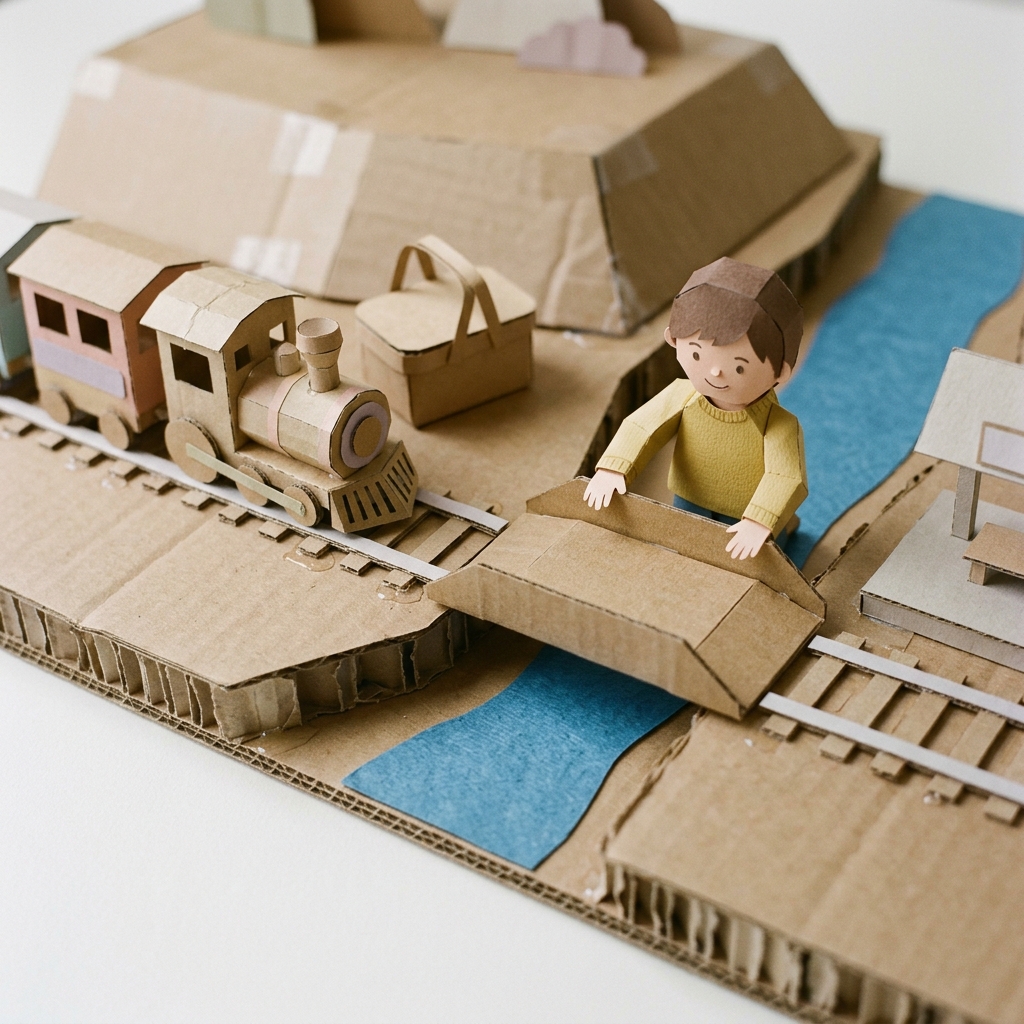
A favorite interest becomes a story when the hero wants something, meets a difficulty, and makes a choice that changes what happens.
“They love trains” is already a useful starting point for a children’s story. Now we need something to do in that world: take a picnic to a station, find a missing carriage, or build a track that doesn’t exist yet.
You don’t need to write the whole book before you begin. We’ve put together a five-line story planner, three invented examples, and a quick way to check whether your idea has a plot. Use it to tell a story at home or prepare a personalized book.
How do you turn an interest into a plot?
Choose a specific interest and give it an action. “Dinosaurs” is a topic; “finding the egg that rolled into a tiny garden” starts an adventure. An interest gives us a way in, without having to appear on every page.
Early-years storytelling guidance suggests drawing on interests, experiences, and play.¹ Our planner is an editorial tool for organizing an idea, not a tested educational method or a promise of better learning.
Next, decide what the hero wants to achieve. Give them something they can attempt: find out who keeps moving the flowerpots, return an object, or reach a place. If they can only wait for an adult to fix everything, try changing one action.
A story planner you can copy
Write these five lines on paper. You don’t need to include personal information or send us your answers. Story maps organize characters, settings, problems, and solutions;² this is our adaptation for a family conversation, without turning it into homework.
| Finish the sentence | A question to get started |
|---|---|
| Our hero loves… | Which game or interest would feel familiar? |
| In this world, they want to… | What could they try to do? |
| But they discover… | What prevents them from getting there straight away? |
| So they decide to… | Which choice changes the situation? |
| At the end… | What is resolved, and what small detail comes home with them? |
A problem doesn’t need a villain. A tunnel might be too narrow, a seed might be unfamiliar, or a map might show only half the route. Choose a difficulty your listener would enjoy exploring. You don’t need to use a real fear.
You can plan a beginning, an attempt, and an ending instead of outlining chapters. Interactive story maps are another option if you prefer working on a screen.³ If you need a setting, browse the worlds for your adventure.
Three examples you can change completely
These are invented situations to show how the planner works. They aren’t customer stories or books generated with Imagibo.
Trains: a picnic across the river
The hero wants to take a basket to a small station. The track stops before the bridge. They decide to pause, inspect their spare pieces, and build a detour. At the station, they share the picnic with everyone waiting.
The interest is the train. The choice is finding another route. Swap the train for a bicycle and the plot still works.
Gardening: the unnamed seed bed
The hero wants to make a patch of flowers. The seeds have become mixed up, so they decide to plant small trial patches rather than throw the bag away. When different shoots appear, they draw a map to remember where each one grows.
We don’t need to describe the entire garden. A few chosen details can establish a setting;⁴ the bag, soil, and first leaves are enough here.
Space: a distant flashing light
The hero wants to find out why a station’s light is flashing. Their spaceship can’t approach directly. They decide to listen to the signals and ask for help finding a safe route. On arrival, they discover a beacon that needs a spare part, rather than an enemy.
Tell it without magic, with impossible machines, or with talking stars. Context, setting, and characters help shape a story concept;⁵ it doesn’t need a surprise in every sentence.
How can you tell whether the idea is ready?
Explain what happens without naming the favorite interest. If all you can say is “they visit somewhere and see things,” add a choice with consequences. If you can say what they try, what gets complicated, and what they do, you have a starting point.
Leave room to discover details as you tell it. If you need to work out who takes part, our guide to describing a story hero can help. This planner prepares the action; that guide develops the character.
In Imagibo, you suggest the world, characters, and heart of the story through a guided AI creation process. Your decisions shape an original story; they don’t prescribe every scene literally. The free preview lets you read all the text and see the cover and illustrated first chapter before paying. Check that the adventure keeps what matters to you: story text cannot currently be edited after generation.
Conclusion: start with one small choice
Keep one interest and a difficulty that invites action. The planner can become a story told over an afternoon snack. You don’t need to buy anything to use it.
If you’d like to turn that starting point into a book, prepare your story in Imagibo. Buying the printed edition is optional and triggers completion of the remaining illustrations.
Frequently asked questions
How do I invent a story when I only have a topic?
Give the hero something to do and a difficulty to work through. Then choose an action that moves things forward. “The sea” could become a search for the origin of a bottle that keeps returning to the same beach.
Can I use the planner if I’m not confident about writing?
Yes. Speak your answers, draw them, or jot down fragments. The planner organizes your idea; it doesn’t grade your writing or replace anything you want to invent along the way.
Does the story need a moral?
No. You can show a value through an action, such as sharing a tool, without adding an explicit lesson at the end. An adventure can also be there simply to enjoy.
Do I need a photo of the child?
No. This activity doesn’t require you to upload anything. Reference photos in Imagibo are also optional; a description can guide the illustrated character.
Will Imagibo print exactly what I write in the planner?
No. Guided creation generates an original story from your decisions rather than printing your notes as a manuscript. Read the complete preview before buying, because generated story text cannot currently be edited.
Sources
¹ Telling stories in early years - National Literacy Trust
² Story maps - Reading Rockets
⁴ What to consider when writing stories for children - British Council