Which language should a storybook be in for a bilingual child?
Choose a storybook language for a bilingual child, with research, family examples, and ways to read together without translating every sentence.
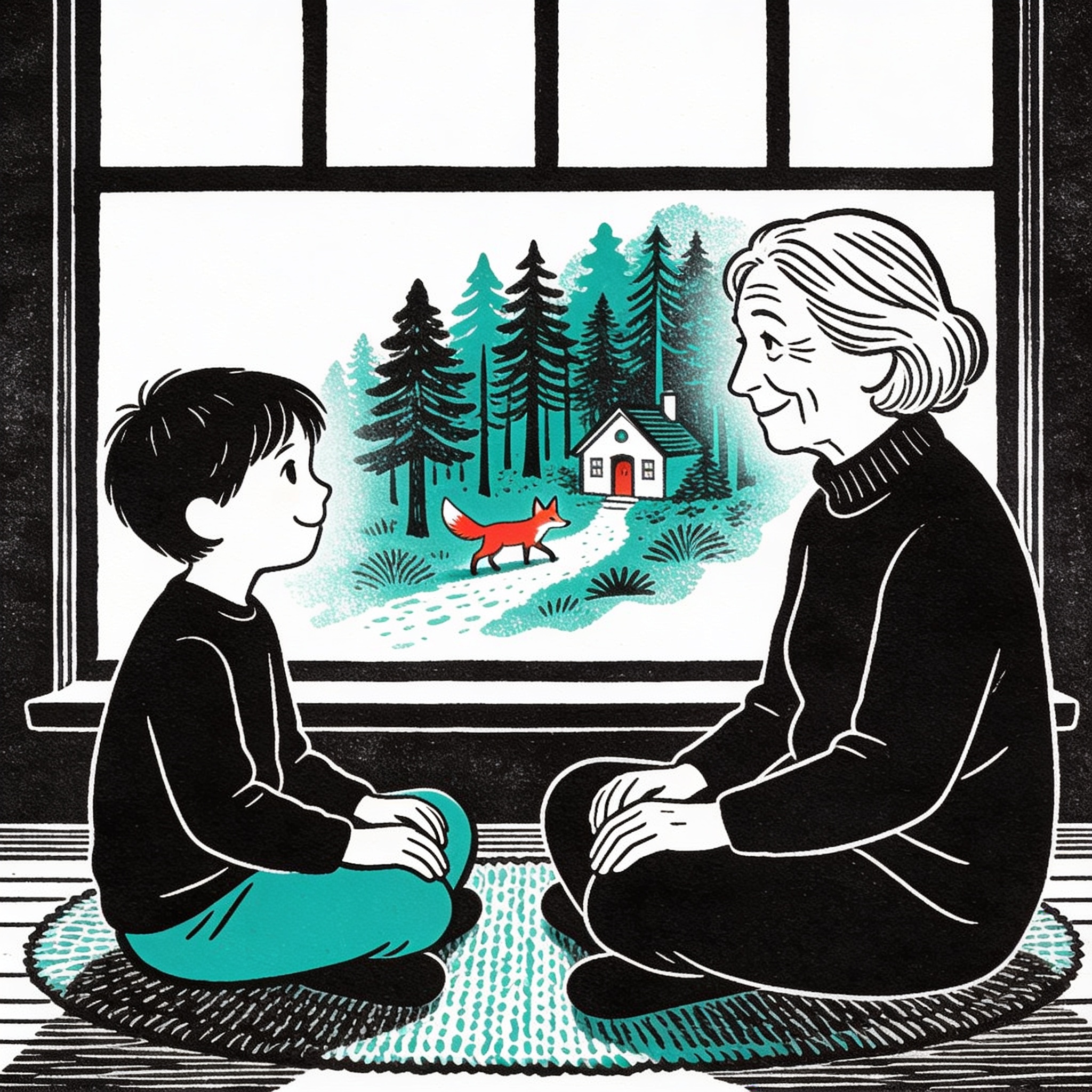
For a bilingual child, choose a storybook language around the person who will share it and the conversation you want to have together.
Choose a language the child can enjoy with the person who will read the book. If both languages fit, we suggest considering the one that has fewer chances to be heard in everyday life. A gift does not have to settle the family’s language choices forever; it needs a place in their real reading life.
Before buying, ask who will share the story, what the child understands when listening, and whether the book is for reading aloud or reading independently. Those answers are more useful than choosing the language that looks most impressive on a cover.
Here we work through that decision, what bilingual-reading research can actually tell us, and how to share a story without turning every page into a translation exercise.
Start with the person who will share the book
For a read-aloud gift, begin with the reader’s comfortable language. The Bell Foundation, an education charity specializing in language learning, encourages families to share books in the language they feel most comfortable using and to talk about the pictures and events.¹
That gives us a practical starting point. If a Spanish-speaking grandparent will read the book every weekend, Spanish deserves serious consideration even when school happens in English. If the gift is for independent reading, ask which language the child currently enjoys reading on the page.
Use these situations as starting points, rather than rules for every bilingual household:
| Reading situation | A useful starting choice | What to check |
|---|---|---|
| A relative will read aloud regularly | A language they enjoy telling stories in | Can the child follow the adventure with their help? |
| Both languages are comfortable for the reader and listener | Consider the language heard less often | Does the child like this particular story in that language? |
| The child wants to read independently | The language they currently read comfortably | Can they read a sample without needing every line explained? |
| You do not know the family’s routine | Ask before ordering | Who will read it, and in which language would they enjoy it? |
Listening and reading alone are separate checks. Imagine a seven-year-old who happily follows a Spanish story but has mostly practiced reading in English. We would choose a Spanish read-aloud differently from a Spanish book they are expected to read alone.
For an aunt, godparent, or family friend, one message can resolve the uncertainty: “I’d love to give them a story. Which language would you enjoy reading together?” You can keep the plot a surprise.
A home-language book does not have to compete with school
There is no need to make every gift a rehearsal for the school language. A study of 33 Spanish- or Hmong-speaking preschoolers combined home reading with English classroom reading and vocabulary teaching. Home-language reading was at least as effective as English home reading for the tested English words.²
This small study does not establish equal results for every book. Our recommendation is narrower: do not dismiss the home language just because you want to support school learning.
For a family using English outside the home and Spanish with relatives, a Spanish story might be chosen for that shared relationship. In a Catalan-English household, the book might belong to a Catalan bedtime routine. Neither choice needs a promise of better grades to be worthwhile.
The American Speech-Language-Hearing Association recommends helping children maintain their languages through everyday talking, singing, play, and shared reading.³ We would place a gift inside that wider routine, rather than ask one storybook to carry the whole job of bilingualism.
Does the book need both languages on every page?
No. A bilingual child can share books in either language; parallel text is one option to consider, not a requirement for every book.
An experiment with 67 English-French bilingual five-year-olds compared single-language and bilingual books. Both groups heard both languages and learned object names, with no detected format difference. The task involved a bilingual adult and tested vocabulary, not long-term fluency.⁴
Our buying advice is to choose the format you will actually use. Consider parallel text when two adults want to read the printed words in different languages. Consider a single-language book when there is a clear reader and a language you want to give room to.
The conversation can be multilingual even with a book in one language. ASHA explicitly includes multilingual conversation around shared books in its guidance.³ A Spanish story can lead to an English question about a fox; you can answer the question and return to the story.
With Imagibo, you select English, Spanish, or Catalan as the story’s language. That choice guides the story’s plan and writing from the start. Choose it for the story you want to share; describing a bilingual household does not request parallel text on every page.
How to share the story without translating every sentence
We suggest keeping the adventure moving and making room for conversation where it feels useful. The following is a reading routine to try, rather than a tested language-teaching program.
Before reading: agree on a small, enjoyable moment
Choose a scene or chapter you both want to hear. For a new book, look at a picture first and talk about what might happen. Ask whether the child would like you to read, take turns, or simply explore the illustrations together.
Catalonia’s education department recommends making shared reading a dialogue, inviting predictions and conversation about illustrations and feelings, and continuing to read aloud after children can read alone.⁵
During reading: respond to the idea first
If the child answers in the other language, follow what they are saying. Guidance from the American Academy of Pediatrics and ASHA explains that mixing languages is normal and does not mean a child is confused.⁶
You might acknowledge their answer, offer the word used in the story, and carry on. If a sentence is genuinely unclear, explain it briefly, point to the picture, or say it another way. There is no need to demand a translation in return.
Example You read a Spanish story about a fox trying to cross a river. The child says, “He needs a boat!” You answer, “Sí, una barca. ¿Dónde podría encontrarla?” The idea stays theirs, and the adventure continues.
After reading: leave room for another encounter
Invite the child to choose a favorite picture or tell you what they would do next. Stop there if that feels enough. Another day, a different relative might talk about the same adventure in another language.
If a book is repeatedly resisted, we suggest revisiting the story, difficulty, timing, and reader before treating the language as the problem. Try a different book together; a gift should not become a test of loyalty to a family language.
What to check before giving a personalized book
Read an actual passage in the chosen language before paying. A localized cover is not enough to judge dialogue, vocabulary, or whether you will enjoy saying the sentences aloud.
For an Imagibo book, creating the preview is free. You can read the complete story text and see the characters, cover, and illustrated first chapter before deciding whether to order the printed softcover. Story text cannot currently be edited after generation, so check the language and names while you are deciding, rather than plan to rewrite them later.
We suggest a short read-aloud check:
- Say a passage in the voice you would use at home. Does it sound natural to you?
- Check names, forms of address, and expressions that matter to the family.
- Decide whether the child will listen, join in, or read alone, then judge the passage for that use.
- Make sure the story interests them beyond the fact that their name appears in it.
You can include familiar interests, companions, and traditions when creating the story. A Catalan book need not be about Sant Jordi, and a Spanish book need not teach Spanish: you can choose a space rescue, a missing recipe, or whatever adventure belongs to this child.
If language is only one part of your decision, our guide to choosing a personalized children’s book also covers story type, illustrations, format, and practical buying checks.
Conclusion: choose for the next shared story
Start with who will read, what the child can enjoy, and which language has a meaningful place in that moment. Choose a story you want to return to, with room for conversation in the family’s languages.
Explore Imagibo’s personalized children’s books. You can choose English, Spanish, or Catalan and read the full story text before deciding whether to buy.
Frequently asked questions
Should I buy the book in the home language or the school language?
For a shared gift, start with the language the reader and child enjoy together. A home-language story can have a place alongside school-language books; consider who will use this particular gift rather than asking it to serve every purpose.
Does a bilingual child need a bilingual book?
No. Two languages printed together are an option, not an obligation. Look at how the book will be shared and whether the printed format helps the people reading it.
Should I translate every page as I read?
We suggest explaining what needs explaining and keeping the story moving. You can discuss a picture in another language without translating the whole page or asking the child to repeat it.
What if the child answers in a different language?
Respond to their meaning and continue the conversation. Mixing languages does not by itself mean confusion, according to pediatric and speech-language guidance.⁶
Which language should I choose if the book is a surprise?
Ask a caregiver which language they would enjoy reading together. That preserves the surprise of the story while avoiding a guess about the family’s reading routine.
Can one storybook make a child fluent in another language?
Do not choose a gift on that promise. The studies discussed here tested particular vocabulary tasks, not fluency; language practice belongs across everyday life.²³⁴
Sources
¹ Supporting shared reading in home languages: guidance for families and schools, The Bell Foundation
² Home reading language: a preschool study, Reading Research Quarterly
³ Learning more than one language, American Speech-Language-Hearing Association
⁴ Bilingual storybook formats: a vocabulary experiment, Infant and Child Development
⁵ Reading together as a family: ten recommendations, Departament d’Educació, Generalitat de Catalunya
⁶ Young children learning multiple languages: parent FAQs, American Academy of Pediatrics and ASHA