How to share a story with a child who doesn't like reading
Choose a story, share the reading, and ease the pressure when a child doesn't want to read, with practical steps and clear research limits.
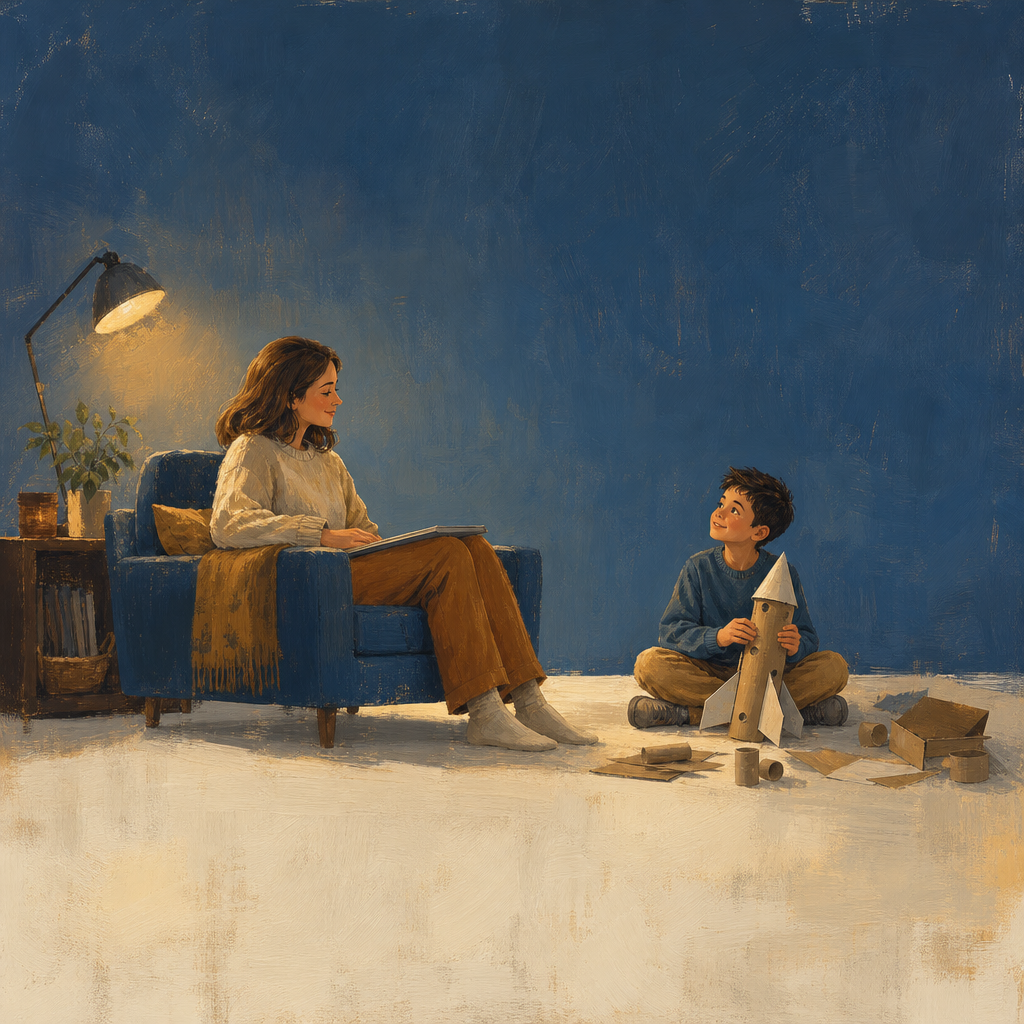
When a child says they don’t like reading, offer a story they can enjoy with you, without making independent reading the price of admission.
Start with something the child wants to hear, offer to read it aloud, and leave them room to join in or simply listen. We suggest making the first invitation small: one scene together, with permission to stop. Buying a book, even one starring them, cannot guarantee a change of heart.
You may be choosing a birthday gift for a seven-year-old who loves space but avoids books, or trying to rescue a bedtime routine that has become an argument. Before choosing another story, it helps to separate the story itself from the effort of reading the words and the expectations around it.
Here we work through those decisions, a routine you can try, and the point at which reading difficulty deserves help beyond a different book.
Find out what makes this reading moment hard
Listen to what the child is declining before deciding they dislike all stories. Ask about a particular moment: was the book boring, were the words hard, or did they want to finish playing? The answer gives you something you can change.
BookTrust, the UK children’s reading charity, recommends offering choice, different formats, and books related to children’s interests.¹
If the story doesn’t interest them
Offer two genuinely different possibilities rather than two books you have already decided they ought to like. A child who turns down a fairy tale might want a funny animal mystery. Someone who loves building may prefer a book about how things work.
For a surprise gift, ask a caregiver what the child currently asks to hear or talk about. A current interest is more useful than a hobby they liked when they were four. You can keep the actual adventure a surprise.
If reading the words takes too much effort
Offer to carry the reading while the child follows the story. Choose a read-aloud for the adventure they enjoy hearing, then check independent-reading practice separately with their teacher. A gift does not need to do both jobs.
Catalonia’s education department recommends reading aloud after children can read alone, agreeing on a comfortable time, and respecting their tastes.²
If the invitation feels like another task
Try changing the invitation before changing the book. “I’ll read the next scene; you can listen” leaves a different choice from “You have to finish this chapter.” If bedtime is already difficult, we suggest trying another quiet moment rather than making sleep depend on completing pages.
If the child declines, put the book aside without a speech about how much it cost. A present should not leave them responsible for proving that an adult chose well.
Choose a story for how you will share it
Choose a book you can picture using together. Treat listening and independent reading as different checks: a child may enjoy hearing a passage they would find exhausting to read alone.
Before giving the book, read a scene aloud yourself. Look for a problem that is easy to follow, dialogue you enjoy saying, and a natural place to pause. For an older child, check whether the humor and the hero’s decisions respect their age, even if they need help with the words.
What personalization can reasonably offer
A personalized story lets you bring the child’s interests into the adventure. That can be a reason to offer the book; it is not proof that this particular child will want to read it.
In an experiment with 18 preschoolers, children showed better knowledge of unfamiliar words from personalized sections than from non-personalized sections at the later tests. The study measured vocabulary, not whether a gift changed reluctant readers’ habits.³ Our explainer on personalization and reading looks more closely at that evidence.
With Imagibo, you choose the protagonist, companions, world, and heart of the story; AI creates an original adventure from those choices for a reader around 3–9. If the child loves foxes and inventing machines, those details can guide the story. We suggest starting with that pleasure rather than asking for a lesson about becoming a “good reader.”
Use the preview to check the actual story
Imagibo’s free preview includes the complete story text, characters, cover, and illustrated first chapter. The remaining illustrations are created after purchase. Read a passage as you would share it, and decide whether the adventure earns its place in the child’s life.
Imagibo does not currently offer text editing. If the wording, tone, or story does not fit, do not buy on the assumption that you can rewrite it afterward. The preview is where you decide whether this is the story you want as a printed softcover.
Try a short reading routine with room to stop
We suggest the following routine as a practical starting point, not a tested program or a promise of results. Keep the school reading practice agreed with the teacher separate from this invitation to enjoy a story.
Before reading: agree on a small part
Choose a scene, a few pages, or a favorite part to revisit. Offer to do the reading. The child might hold the book, choose a character’s voice, or just listen; none of those roles needs to become a job they must perform.
You could say, “Shall we find out what happens to the fox, and then decide whether to carry on?” Make the choice real. If you promise one scene, don’t turn the next scene into a condition for stopping.
While reading: follow the story and the child
Read in a voice you enjoy using. Leave a pause when something surprising happens. If the child points out a detail, respond to it; if they are absorbed in listening, there is no need to interrupt every page.
The Education Endowment Foundation, an education evidence charity, suggests taking turns, following children’s interests, and trying only one or two ideas at a time.⁴ We suggest keeping the conversation light.
A question can be an invitation to join in. You can wonder aloud about a character’s decision without requiring an answer. If the child wants to read a line, let them; you do not need to hand over the next paragraph as well.
Example In this invented scene, a seven-year-old who likes space won’t read the page aloud but asks why the fox’s rocket has wheels. The adult talks about the wheels, then carries on reading. The child’s idea becomes part of the shared story; no extra reading is required to earn the conversation.
When you stop: keep the next visit open
Mark the place and finish without a comprehension test. If the child wants to draw the rocket or tell you a different ending, enjoy that conversation. If they want to go back to their game, let the story rest.
Next time, offer the marked scene or another book. Our suggestion is to make returning easy, without treating an unfinished chapter as a debt.
Notice enjoyment, and get help with persistent difficulty
During a shared story, notice whether the child chooses a picture, comments on the plot, or asks to hear a part again. Those are useful reasons to keep sharing the book, rather than evidence of improved independent reading.
A review of 19 randomized trials involving 2,594 children found small average language benefits after adults learned to share picture books; studies’ mean child ages ranged from one to six.⁵ It did not test this routine or Imagibo books.
For persistent trouble sounding out words or reading aloud, talk with the child’s teacher. Reading Rockets, a literacy education project, recommends this first step.⁶ Keep the gift alongside that support.
You might explain that the child enjoys listening but becomes upset when asked to read a short passage, and ask what support to use at home. That gives the teacher a clearer starting point than “they hate books.” For a gift-giver, the useful role may be to keep offering an enjoyable story while the caregiver and school handle reading support.
Conclusion: give the story room to be enjoyed
Start with the child’s interests, decide who will read, and offer a small moment you can end kindly. A familiar joke or a question about a fox is enough reason to share another page. The gift does not need to prove a change in reading ability.
Explore Imagibo’s personalized children’s books. You can shape an adventure around the child and read the complete story text before deciding whether to order it.
Frequently asked questions
Should I make the child read a page before I read to them?
We suggest offering the shared story without that condition. If there is reading practice agreed with a teacher, make its purpose clear rather than using the gift as a reward for completing it.
Can I still read aloud to an eight- or nine-year-old?
Yes. Catalonia’s family-reading guidance recommends continuing after children can read alone.² Choose a story they enjoy now.
What if they only want comics or the same old book?
Comics and rereading are among BookTrust’s suggestions.¹ Keep those choices available and offer a new story alongside a favorite.
Will a personalized book make a reluctant child love reading?
You cannot count on that outcome. Choose it for a story you want to share, after reading an actual passage and deciding who will read it.
How long should we read together?
For the routine we suggest here, agree on a manageable part of the story and allow a pause. It has no fixed minute target; follow any separate reading-practice advice from the child’s teacher.
When should I ask the school for help?
Ask whenever ongoing reading difficulty concerns you, and bring examples of what happens with familiar text.⁶
Sources
¹ What if my child doesn’t like reading? - BookTrust
² Ten recommendations for reading as a family - Departament d’Educació, Generalitat de Catalunya
³ Personalized books and word knowledge: a preschool experiment - First Language
⁴ Making use of TRUST Talk: supporting shared reading at home - Education Endowment Foundation
⁵ Shared reading and language development: a meta-analysis - Child Development